

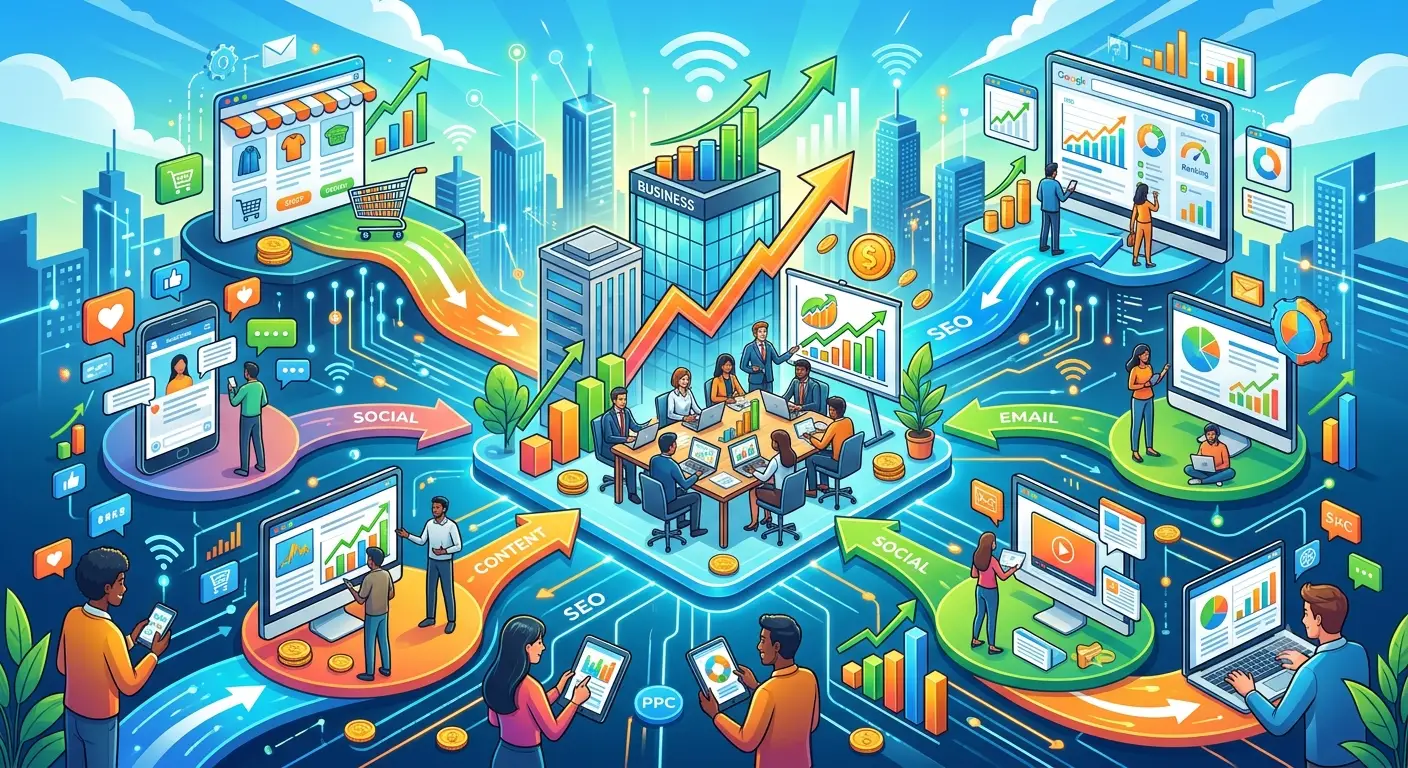
Digital marketing helps businesses reach their target audience, improve online visibility, generate qualified leads, and build lasting customer relationships. By combining SEO, PPC advertising, content marketing, local SEO, and website optimization, businesses can develop a stronger online presence and create opportunities for sustainable growth.
Key Takeaways
- Digital marketing helps businesses connect with relevant audiences across online channels.
- SEO improves organic search visibility and supports long-term website growth.
- PPC advertising can bring targeted traffic through paid campaigns.
- Content marketing and social media help build brand awareness and customer engagement.
- Regular performance analysis helps businesses refine their strategies and use marketing budgets effectively.
What Is Digital Marketing?
Digital marketing refers to promoting products, services, and brands through online channels such as search engines, websites, social media platforms, email, and paid advertising networks.
Unlike traditional marketing methods, digital marketing allows businesses to reach specific audiences, measure campaign performance, and adjust their strategies based on available data.
From small businesses and startups to established companies and e-commerce stores, organizations can use digital marketing to communicate with potential customers, showcase their offerings, and strengthen their competitive position.
Why Is Digital Marketing Important for Businesses?
Customers frequently use search engines, social platforms, and websites to research products and compare services before making purchasing decisions. A well-planned digital marketing strategy helps businesses become visible during this process.
1. Improves Online Visibility
A strong online presence makes it easier for potential customers to find your business. Search engine optimization, useful website content, business listings, and relevant digital campaigns can help improve visibility across important online channels.
When your website provides clear information about your services and answers customer questions, visitors can better understand what your business offers.
2. Reaches the Right Audience
Digital marketing enables businesses to target audiences according to factors such as search intent, interests, location, and campaign objectives.
For example, a local service provider can focus on customers within its service area, while an online retailer can target shoppers interested in specific product categories. Relevant targeting helps make marketing activities more focused.
3. Supports Lead Generation
A website can serve as an important source of inquiries and potential customers. Clear service pages, useful content, contact forms, and effective calls to action can encourage visitors to take the next step.
Combining search visibility with a user-friendly website experience helps businesses create opportunities to turn relevant website traffic into inquiries and sales.
4. Makes Performance Measurable
Digital marketing provides access to useful performance indicators, including website traffic, search impressions, clicks, advertising costs, conversion rates, and leads.
Businesses can use these insights to identify effective campaigns, understand audience behavior, and improve underperforming areas.
Essential Digital Marketing Strategies for Business Growth
An effective strategy combines different marketing channels according to business goals, audience needs, and available resources.
Search Engine Optimization (SEO)
SEO helps improve a website’s visibility in organic search results. It includes keyword research, technical optimization, content improvements, internal linking, and website structure enhancements.
A well-maintained SEO strategy helps search engines understand your pages while making information more useful and accessible to visitors.
Businesses should prioritize relevant content, strong technical foundations, and genuine value rather than relying on keyword stuffing or manipulative link-building techniques.
Pay-Per-Click Advertising (PPC)
PPC advertising allows businesses to display paid ads on platforms such as search engines. Advertisers generally pay when users interact with their ads, depending on the advertising model.
PPC campaigns can help businesses reach audiences actively looking for specific products or services. Effective campaign management includes keyword selection, audience targeting, ad copy, landing page quality, budget monitoring, and conversion tracking.
Content Marketing
Content marketing involves creating useful and relevant material that addresses audience questions and needs. Examples include blog articles, service pages, guides, videos, and educational resources.
High-quality content can support SEO, demonstrate subject knowledge, and help potential customers make informed decisions.
Businesses should focus on answering real questions instead of publishing repetitive articles solely to target keywords.
Local SEO
Local SEO helps businesses improve visibility for searches connected to specific locations. It is particularly useful for service providers, local retailers, clinics, and other businesses serving defined geographic areas.
Important activities include maintaining an accurate Google Business Profile, developing relevant location pages, managing business information, and earning genuine customer reviews.
Consistent business details and useful local content can help customers understand where a business operates and which services it provides.
Social Media Marketing
Social media provides opportunities to share updates, communicate with audiences, promote content, and develop brand recognition.
The most suitable platforms depend on the target audience, industry, and business objectives. Consistent communication and relevant content are generally more valuable than posting frequently without a clear purpose.
Website Management and Optimization
A business website should provide accurate information, load efficiently, work across devices, and make important actions easy to complete.
Regular website management can include updating content, checking links, monitoring technical issues, improving navigation, and maintaining website functionality.
A positive user experience helps visitors access information and understand how to contact your business.
How to Build an Effective Digital Marketing Strategy
A structured approach makes it easier to prioritize activities and evaluate progress.
Step 1: Define your goals. Decide whether your priority is brand awareness, organic traffic, qualified leads, online sales, or customer retention.
Step 2: Understand your audience. Identify customer needs, common questions, search behavior, and the factors influencing purchasing decisions.
Step 3: Select suitable channels. Choose SEO, PPC, content marketing, local SEO, or social media based on your objectives and resources.
Step 4: Optimize your website. Create clear service pages, helpful content, mobile-friendly layouts, and accessible contact options.
Step 5: Measure performance. Monitor relevant metrics using tools such as Google Analytics and Google Search Console, where appropriate.
Step 6: Improve consistently. Use performance insights to refine content, campaigns, targeting, and website experiences.
Digital marketing results vary by industry, competition, budget, and implementation. SEO typically requires sustained effort, while paid campaigns can generate traffic sooner but depend on budget, targeting, and conversion effectiveness.
Common Digital Marketing Mistakes to Avoid
Businesses can weaken their marketing efforts by focusing on website traffic without considering its relevance, using the same message across every channel, neglecting mobile usability, or failing to track conversions.
Other common mistakes include publishing low-value content, targeting overly broad keywords, ignoring local search opportunities, and expecting immediate results from every marketing activity.
A balanced strategy focuses on business outcomes, useful customer experiences, consistent execution, and ongoing evaluation.
How Madhavix Digital Can Support Your Business
Madhavix Digital offers digital marketing and technology services designed to address different online business needs. Depending on your goals, these services include SEO, PPC advertising, e-commerce SEO, local SEO, link building, website management, and software design and development.
By identifying relevant opportunities and selecting appropriate strategies, businesses can work toward improving their online visibility, attracting relevant audiences, and creating better digital experiences.
Whether you want to improve organic search performance, strengthen advertising campaigns, or enhance your website, choosing services that align with your objectives is an important first step.
Frequently Asked Questions
What are the main benefits of digital marketing?
Digital marketing can help businesses improve online visibility, reach relevant audiences, generate leads, promote products and services, and measure marketing performance.
Which digital marketing strategy is best for a small business?
The right strategy depends on your goals and audience. Local SEO may benefit location-based businesses, while SEO, PPC, and content marketing can support broader visibility and lead generation objectives.
How long does digital marketing take to produce results?
Timelines vary by channel. Paid advertising may generate traffic soon after launch, while SEO and content marketing often require several months of consistent work to demonstrate meaningful progress.
Is SEO part of digital marketing?
Yes. SEO is an important part of digital marketing that focuses on improving organic search visibility, website relevance, and accessibility for search engines and users.
How can I measure digital marketing success?
You can track metrics such as relevant website traffic, organic clicks, qualified leads, conversion rates, advertising return, and customer acquisition costs, depending on your business objectives.
Digital marketing is an ongoing process that combines visibility, relevant content, audience engagement, and performance analysis. Businesses that understand their customers and choose appropriate digital channels can make more informed marketing decisions.With a clear strategy and consistent optimization, digital marketing can help establish a stronger online presence and support long-term business objectives.Ready to strengthen your online presence? Visit Madhavix Digital to explore our digital marketing, SEO, PPC, and website solutions, or contact our team at seo@madhavixdigital.online to discuss your business requirements.
